Why Fabric Feel Matters in High-Stress Healthcare Environments

Healthcare runs on sensory overload. Monitors beep in irregular rhythms all day. Fluorescent lights stay on for twelve hours at a stretch. Alcohol swabs and disinfectant hang in the air, and the hum of HVAC systems never quite goes away. For clinicians moving through hospital floors, dental offices, and veterinary clinics, that's simply the backdrop of the job.
Most administrators think about that environment in terms of safety and workflow. Fewer think about what it does to the people standing in the middle of it for twelve hours at a time. One of the only variables clinicians can actually control in that environment is what's touching their skin.
Comfort Means Something Different to Everyone
Ask ten clinicians what "comfortable scrubs" means and you'll get more than one answer. That's not indecision. Fabric affects people differently under stress, and there's no single fit or fabric composition that calms every nervous system the same way.
Some staff want the structured, crisp feel of a traditional cotton-blend scrub. That structure reads as professional to them, and having fabric that holds its shape through a long shift helps them feel put together and in control, even when the day isn't.
Others land at the opposite end of that range: a stretch, moisture-wicking fabric that moves more like a pair of joggers. When a shift gets tense, that softer, more forgiving fabric keeps them from feeling boxed in on top of everything else happening around them.
And plenty of staff fall somewhere in the middle, in a fabric blend that offers some stretch without losing its shape, or a relaxed fit that isn't quite as fitted as a jogger but still moves easily through a shift. With 22+ leading scrub brands in the mix, there's a fit and fabric for nearly every point on that range, not just the two ends of it.
Neither preference is more correct than the other. Comfort under stress is personal, and the right fit for one person on the floor might not work at all for the person working right next to them.
Offering That Range Doesn't Create Extra Work
Here's what makes this useful for administrators managing a uniform program: giving employees that range of fits and fabrics doesn't add a single step to how the program runs. The color and logo requirements stay exactly the same. Employees simply choose the fit and fabric that actually works for them, within the brands you've already approved, and ordering, embroidery, and delivery all continue running the way they already do.
That small amount of flexibility functions like a wellness benefit for staff, and it's one you can offer without changing anything on your end. A twelve-hour shift feels different in scrubs that genuinely work for the person wearing them, and staff notice when that choice is there for them.
Built Into How Uniform Stores Works
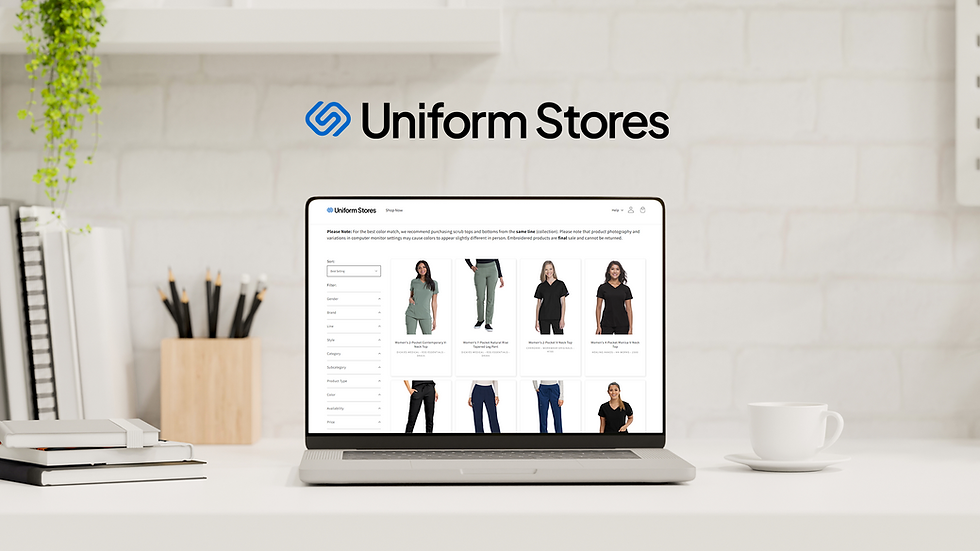
This is part of why Uniform Stores structures programs the way it does. Administrators set the guardrails, meaning color, logo, and approved brand list, and employees choose from 22+ scrub brands within those guardrails, spanning structured, traditional fits, stretch and moisture-wicking options, and everything in between. Everyone stays on brand. Everyone gets scrubs that fit how they actually experience the day.
If you manage a uniform program and haven't thought about fabric feel as part of the employee experience, it's worth a second look. It's a low-effort way to support your team through some of the most sensory-demanding shifts in any industry.
Ready to see how it works for your team? Book a free demo and we'll walk you through setting up a program that gives your staff real choice, without adding work to your plate.